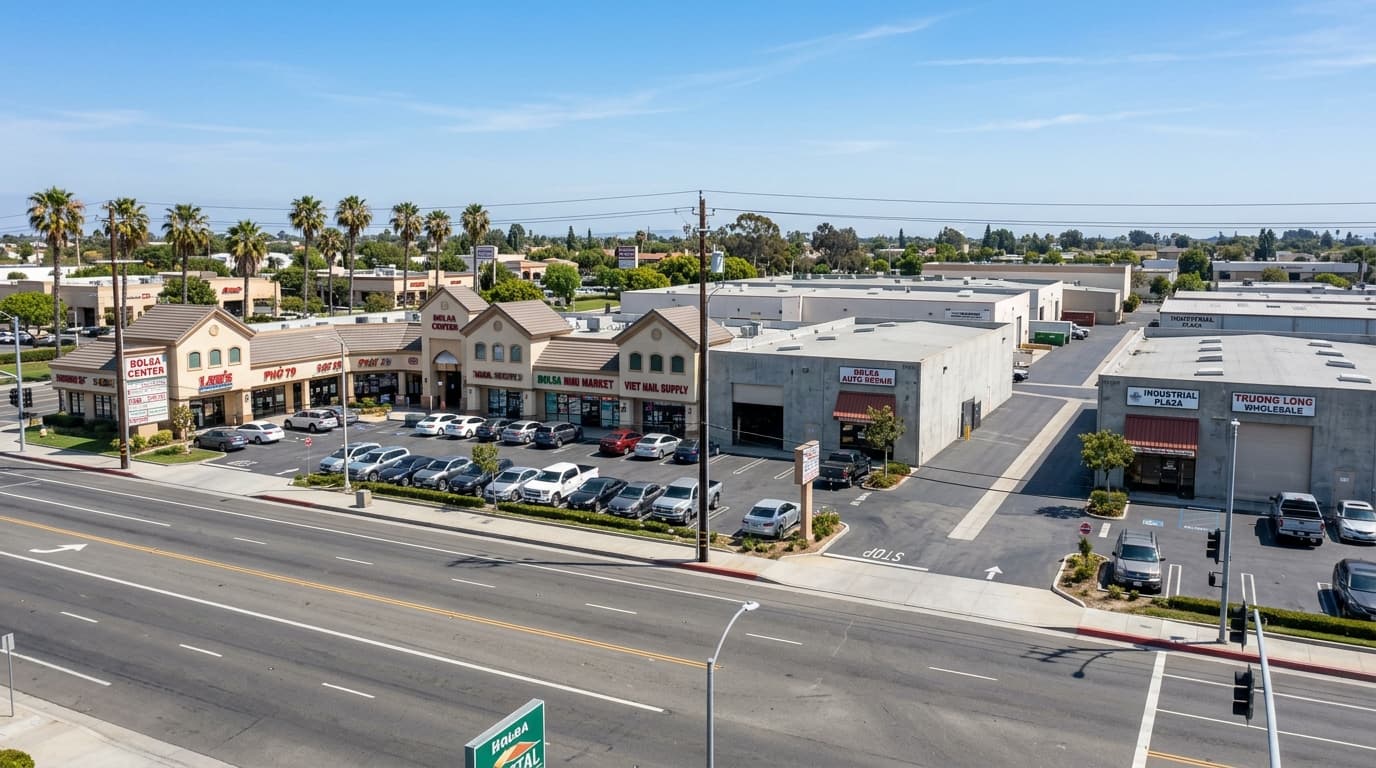
Commercial Real Estate Insights: Navigating Industrial and Retail Assets along Bolsa Avenue
By Julayne Luu
Bolsa Avenue blends retail, small industrial, and service properties. See how investors and business owners evaluate these assets, from tenant quality to lease structure.
Bolsa Avenue runs through a part of Orange County where retail centers, service businesses, small industrial buildings, and mixed-use properties sit side by side. For investors and business owners, that variety creates opportunity, and it also requires careful evaluation. Commercial property is judged differently from residential, with more emphasis on income, tenants, and lease terms. This guide outlines the key issues.
Two Ways to Use Commercial Property
- Investment. You buy to lease the property to tenants and earn rental income, possibly with long-term appreciation.
- Owner-user. You buy a building to operate your own business, building equity instead of paying rent.
Some buyers combine both by occupying part of a building and leasing the rest. The right approach depends on your goals, capital, and tolerance for risk.
Retail Assets: What to Review
Retail properties depend heavily on the strength of tenants and the surrounding customer base. Evaluate:
- Tenant mix. Are tenants diversified, or does one business account for most of the income?
- Tenant strength. Consider operating history, financial health, and the type of business.
- Visibility and access. Traffic counts, signage, parking, and ease of entry affect performance.
- Lease terms. Remaining term, rent increases, renewal options, and who pays expenses all matter.
- Co-tenancy and use restrictions. Some leases include provisions that affect rents if anchor tenants leave.
Industrial Assets: What to Review
Smaller industrial buildings serve warehousing, light manufacturing, trades, and distribution. Key factors include:
- Building specifications, such as clear height, loading doors, power capacity, and truck access
- Zoning and permitted uses, which determine what tenants can do
- Yard space and parking, which may be limited
- Environmental condition, since past uses can create contamination concerns
- Tenant demand, based on local vacancy and lease rates for similar spaces
Understanding Lease Structures
Commercial leases vary, and the structure changes how much of the property's costs are paid by the tenant.
- Gross lease. The tenant pays a single rent, and the landlord covers operating expenses.
- Modified gross. The expenses are shared in a defined way.
- Triple net lease. The tenant pays rent plus taxes, insurance, and maintenance. This can provide more predictable income for the owner.
Read leases carefully, since details about escalations, repairs, and termination rights drive value.
Due Diligence Essentials
Before buying, review:
- Rent roll, leases, and tenant estoppel certificates, which confirm key lease facts
- Operating statements and the reconciliation of expenses
- Physical condition, including roof, parking, HVAC, and structural items
- Title, survey, and zoning confirmation
- Environmental reports where warranted
- Property tax implications of the purchase
- Insurance coverage and costs
Financing Considerations
Commercial loans are generally evaluated based on property income and the borrower's financial strength. Terms are often shorter, with amortization schedules longer than loan terms, which means a balance may come due and need to be refinanced or repaid. Down payments are typically higher than for residential purchases. Owner-user buyers may have access to specialized programs, so ask a commercial lender about options.
Risks to Weigh
- Vacancy and tenant turnover
- Changes in consumer behavior affecting retail
- Deferred maintenance and capital repairs
- Interest rate changes at refinancing
- Regulatory or zoning changes
How Cap Rates Fit In
Cap rates provide a quick measure of income relative to price, but they should be considered alongside lease quality, building condition, and growth potential. A low cap rate might reflect stability, while a high cap rate might reflect higher risk. Ask what is driving the number before drawing conclusions.
Next Step
If you are exploring commercial opportunities along Bolsa Avenue, a focused review of the properties and the numbers can save time and reduce risk. Access our commercial listings, and let us help you evaluate which assets match your investment or business goals.
Julayne Luu, DRE #01386573 | Century Financial Group, Corp., DRE #01930905 | 8295 Bolsa Avenue, Midway City, CA 92655. This article is general information only and is not legal, tax, or financial advice. Equal Housing Opportunity.
Educational content only. Discuss property-specific guidance with a licensed professional.
Access Commercial ListingsJulayne's services